Unlock the Joy of Teaching the Carnival of the Animals
I’ll never forget the first time I used The Carnival of the Animals Camille Saint-Saëns in my classroom. I was excited to introduce these fun, whimsical songs to my students.
At the time, I was at the beginning of my teaching career, and I decided to play one of the Carnival of the Animals songs at the start of each class. I asked the students to guess which animal it might be and encouraged them to move like that animal to the music. The kids loved it! They giggled, hopped, tiptoed, and roared with excitement.
Yet, the music was so short. It left a lot of time to fill for the rest of the music class. I was wishing there was a way to stretch it into a full music lesson plan—let alone a meaningful unit. I knew there was something special in Saint-Saëns’ Carnival of the Animals, but I didn’t have the tools or the time to bring it to life in a way that taught real music concepts.
It took years of trial and error—and a lot of learning—but eventually, I created a complete music unit around The Carnival of the Animals that goes far beyond just guessing games and movement.
Building a Complete Unit for The Carnival of the Animals With Purpose
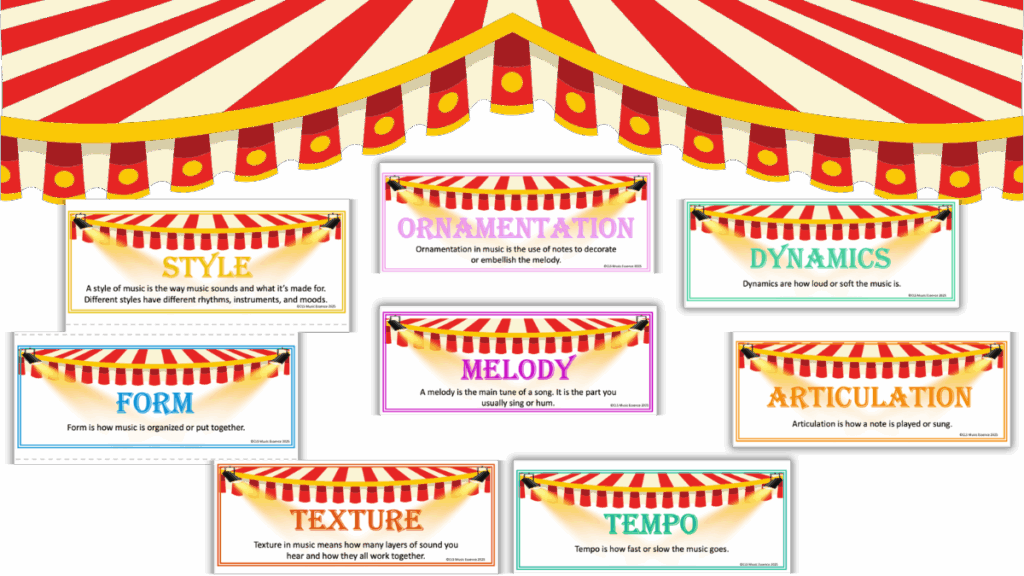
Instead of using the suite just for movement breaks (though that’s still part of it!), I designed each lesson to dive deeper into core music concepts. Each song became a unique opportunity to teach a specific element of music:
- Ornamentation
- Form
- Style
- Tempo
- Dynamics
- Articulation
- Melody
- Texture
I started by researching the story behind the music from the Carnival of the Animals and created a narration to get students excited to hear each song. I included details about the musical instruments, interesting characteristics of the animals, and the vocabulary Saint-Saëns used to bring them to life.
“Did you know donkeys are very social animals who form lifelong friendships?”
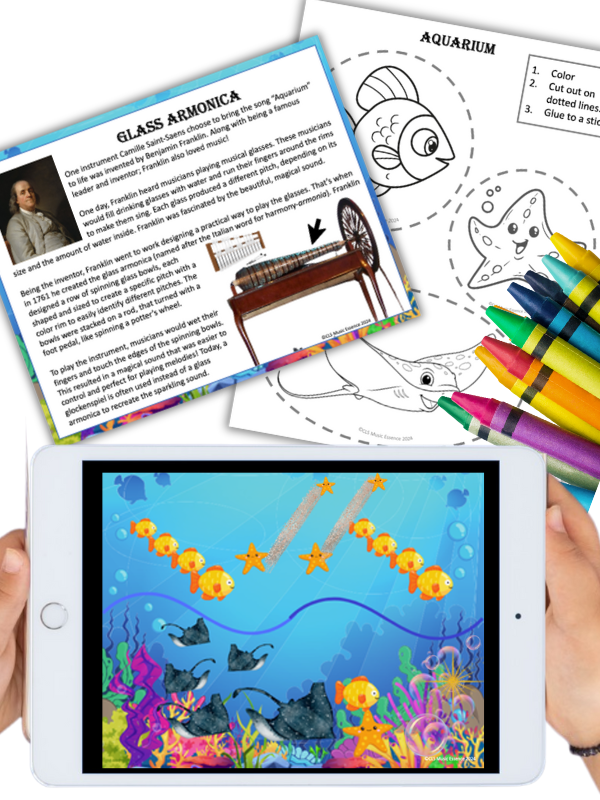
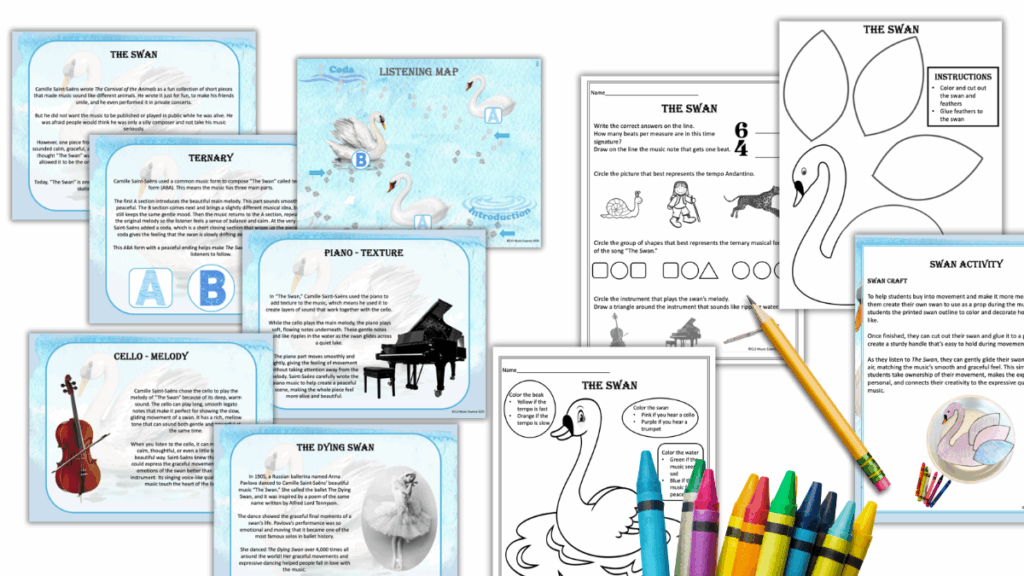
One of my favorite parts was creating colorful listening maps that help students travel through the music. This nontraditional way of listening to the Carnival of the Animals helps highlight form, sound, and melodic contour. I love watching students trace the movement of the music as they follow the flight pattern of a bird in an aviary.
Highlights for The Carnival of the Animals
- Listening maps that help students visually track what they hear
- Vocabulary lists and definitions
- Crafts and creative movement activities that reflect the feel of each animal
- Simple rhythm and instrument-playing experiences for musical interaction
- Worksheets and review games to reinforce vocabulary, symbols, and musical terms
- History slides and narration to connect students with Saint-Saëns, the orchestra, and the era
Songs from the Carnival of the Animals became more than just a fun activity—it became a truly musical experience.
I also added creative projects that made the experience memorable, imaginative, and enjoyable. Sometimes it was a puppet, a model instrument, or a coloring page that we incorporated with movement. Other times we played along with percussion instruments or acted out the call of the cuckoo. We’d often wrap up class with a worksheet or game to help students remember the term, symbol, or concept introduced that day.
Why The Carnival of the Animals It Works
Kids love animals. Kids love stories. And when we pair those things with expressive music and hands-on learning, we create magic in the music room.
The suite’s variety of styles and instruments makes it perfect for introducing music vocabulary in context. I came up with eight music elements and 40 music terms and symbols for students to explore.
- Glissando with the aquarium
- Tremolo in the lion’s roar
- Grace notes with hopping kangaroos
- Contrasting textures in “Finale”
…all through music they’ll remember. And because the pieces are short, they’re perfect for the attention spans of younger learners.
A Gift for Music Teachers
If you’re just starting out with the Carnival of the Animals, or you’ve used it before and are looking for fresh inspiration, I encourage you to think of each song as a doorway into deeper learning. There are so many creative ways to use this music—not just for movement and fun, but to build real understanding of musical concepts.
What helped me most was approaching each piece with curiosity:
- What musical element stands out here?
- What instrument is featured?
- How can this piece spark creativity or reinforce vocabulary?
Don’t be afraid to mix and match—add a listening map one day, try a craft or play-along another. Use movement to reinforce articulation or dynamics. Display terms on the board or use them as exit tickets. Let the animals guide the learning.
You don’t need to reinvent everything. Start small, build with what you love, and don’t be afraid to try something new. Over time, your Carnival of the Animals Camille Saint-Saëns unit will grow into something magical, too.
Carnival of the Animals animals – Lion, Hens & Rooster, Wild Donkey, Tortoises, Elephant, Kangaroos, Aquarium, Characters with Long Ears, Cuckoo, Aviary, Pianists, Fossils, Swan, Finale.